
What a track identifier can tell you from one photo
A photograph alone usually cannot establish a species with certainty. That holds for a person with a field guide and for software alike. The picture shows a shape. It does not show the stride, the habitat, or how big the print really was.
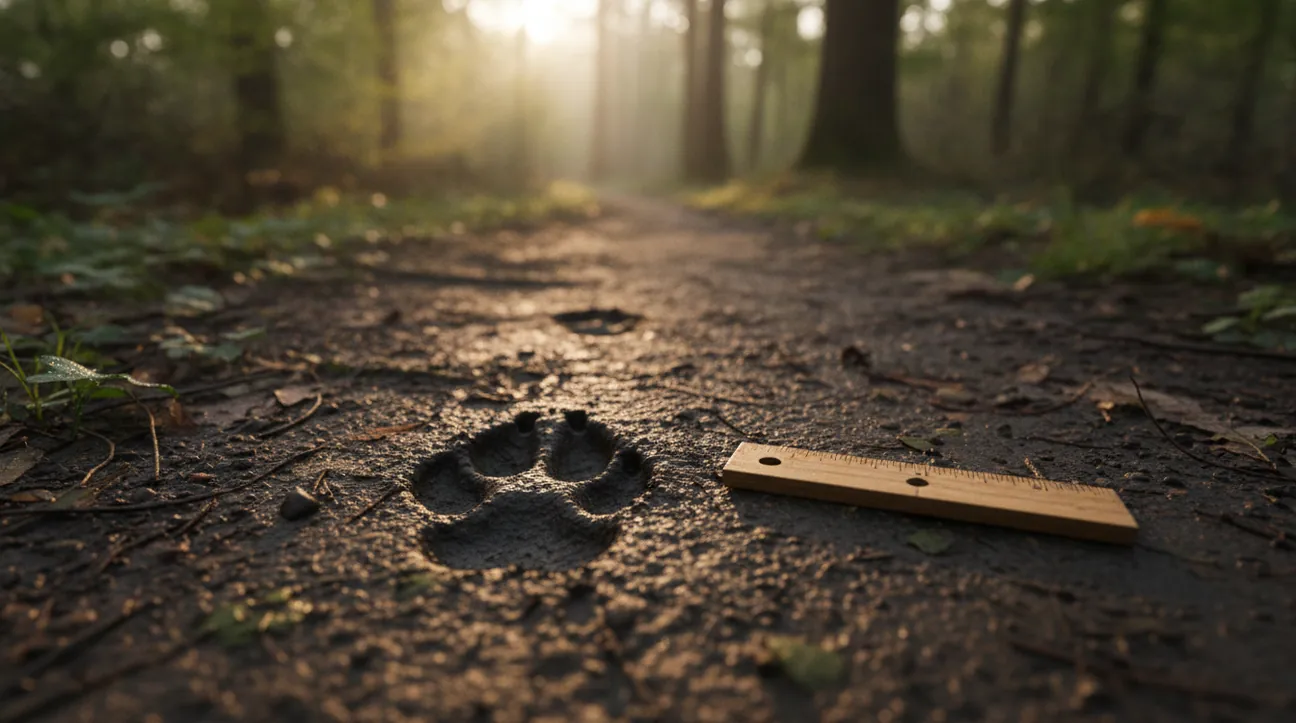
The University of Arizona Cooperative Extension guide covers 31 wild and domestic species in southwest Arizona. It photographs every track and scat next to a one-inch scale bar, and it is worth copying that habit. Scale, location, several prints and the animal's behavior are what turn a guess into an ID.
Sometimes the honest answer is a group, such as canine, feline or small mammal. Reporting that beats naming a species your evidence cannot support.
Getting a track or scat photo an identifier can use
Blurry or shadowless shots cause more wrong answers than tricky animals do. Work through these steps before you leave the spot.
- Photograph the whole trail or the whole scat location first, so the stride and surroundings show.
- Photograph the clearest single print or scat from directly above, not at an angle.
- Lay a ruler beside it without touching the sign, and take a shot with the scale in frame.
- Write down the date, time, general area, habitat, ground type, weather, and any water or food nearby.
- Measure the length and width of the clearest print. Skip a smeared edge or a partial print.
- Record front and hind prints separately, because their size and shape can differ.
- Count the toes, then note claw marks, pad shape, toe spacing and the order of the prints in the trail.
- Compare your notes with a regional field guide, starting with track type or scat shape.
Ten minutes of this beats an hour of guessing later at your desk.
Track features that settle an ID
Color and overall look tell you almost nothing on the ground. Structure and dimensions do the work.
- Toe count. Count the toes on front and hind feet. It is the first split in any track guide.
- Claw marks. Visible claws commonly point to a canine. No claw marks can support a feline ID but cannot prove it, and a claw mark can be mistaken for a toe.
- Pad shape. Note the size and shape of the central pad and of each toe pad.
- Dimensions. Measure length and width in inches or centimeters on the best print you have.
- Gait and arrangement. Look at stride, trail width, and whether hind prints land on top of front prints.
- Ground type. Mud, sand, snow, dust and soft soil each blur edges differently, so a print in dust looks bigger and softer than the same foot on firm mud.
Example track sizes from the Arizona guide
The guide gives measured examples. One animal shows a front track of 3.5 by 3.5 inches and a hind track of 3 by 3 inches. Another shows a front track of 2.5 by 2 inches and a hind track of 2 by 2 inches. In both, the front print runs a half inch longer than the hind print. That is why you record the two feet separately.
Look-alike pairs that fool people
These are the confusions that come up most. In every pair, a single print is a weak basis for a species name.
| Look-alikes | What helps | What can mislead |
|---|---|---|
| Dog and wild canine | Location, a consistent track sequence, several prints | Dog tracks vary widely, often with splayed toes and an irregular gait |
| Coyote and fox | Track size, compactness, stride, habitat, the full trail | Both have four toes and claw marks |
| Cat and dog | A broader heel-pad pattern and usually no claw marks on a cat | Ground type and overprinting can hide both traits |
| Bobcat and domestic cat | Size and habitat | Size ranges overlap |
| Raccoon and opossum | Toe arrangement, front-to-hind size comparison, trail pattern | Both can leave hand-like prints |
| Bear and large dog | Five toes and a large heel pad on a bear | A partial or muddy print hides both |
A dog track near a trailhead, with human signs close by, is most likely a dog. A wild canine needs more than that. You want several prints in a steady line, and a location that fits. If the evidence stops short, write canine and leave it there.
Scat clues you can read from a safe distance
A scat identifier works the same way a track identifier does. You gather clues and narrow the list. The clues are shape, size, contents and placement.
Record whether the scat is tubular, segmented, globular, loose or flattened. The Arizona guide lists examples measuring 4 by 1 inches, 3 by 1 inches and 5 by 4 inches, depending on the animal and the form. Some of its scat is segmented and may hold bones or hair. Some is globular or tubular.
Contents help, but only so far. Hair, bones, seeds, feathers and plant material narrow the field, yet diet overlaps between species. Tubular, segmented scat with hair or bones is not unique to one animal. Placement adds evidence too. Look for scratch piles, trails, roads and latrines, since territorial spots say something about the animal's habits.
Do not trust shape alone. Pellets, dried plant debris you can check separately and decomposing organic matter can pass for scat at a glance.
Keep your hands off it. The Arizona guide advises avoiding contact. If you must move it, wear gloves and use a tool.
Free track identifier apps and which ones fit
Searchers often want a free track identifier app, and the honest picture is mixed. Most popular nature apps are built to recognize whole organisms, not footprints.
- Seek by iNaturalist. It gives real-time image-recognition suggestions for plants and animals through a mobile app, so it works as a quick preliminary look.
- iNaturalist. It combines AI suggestions with community identifications. It is commonly used for plants, fungi and invertebrates, and you can submit a photo when the subject is appropriate.
- Merlin Bird ID. It identifies birds from photos and sounds. It is not a track or scat database. If the sign on your trail is a feather rather than a print, use a feather identifier for bird finds or the bird identifier instead.
- Regional field guides and extension services. These give species lists, measurements and habitat for your area, which a global app cannot.
The upload box here reports what it sees in your photo, along with how sure it is. Use it as a first pass, the same way you would use any app. Every automated result is a suggestion, not proof. Check it against your measurements, your trail photos and a regional guide.
The same approach works for other finds. You can identify other finds from a picture and still apply the habit of checking scale and location first.
Safety, privacy and collecting rules for field IDs
Fresh sign means a real animal may be close, and if you are worried about parasites after a hike, our guide to identifying ticks on skin can help, while our guide to identifying snakes on the trail covers slithering encounters. Do not approach dens, nests (if you find eggs, our guide to identifying bird eggs and nests can help), carcasses or fresh tracks if an animal could be nearby, and if the sign looks like a web or a bite, our guide to identifying spiders you encounter can help.
Wash your hands after fieldwork. Keep dirty boots, tools and pets away from food-preparation areas.
Rules vary by place. Wildlife, tracks, and the collection of rocks, plants, fossils, artifacts or coins can fall under local land-management, trespass, collecting or protected-species rules. Check the rules for your location before you take anything home. The same goes if you pick up stones along the trail, so read up on identifying rocks you find outdoors and the local limits.
Watch what your photo gives away. Exact GPS coordinates can reveal sensitive wildlife locations or private residences. Review an app's privacy settings before you upload, because terms can change. Do not publish faces, license plates or house numbers without consent.
Why a track gets the wrong animal
Most wrong IDs trace back to the same short list. People photograph without a scale. They measure a distorted print. They treat one print as conclusive, or ignore the difference between front and hind feet. Some take a claw mark for a toe.
Others forget the ground. Substrate, weather and time since the animal passed all change how a print looks. With scat, the usual error is assuming hair or bones point to one species, when diet overlaps.
Two more come from tools. A global app may not know your regional species, and an automated suggestion is easy to accept as confirmed. Last, people name a precise species when the evidence supports only canine, feline or small mammal. That level of caution is not weakness. It is the correct answer.
When to get a second opinion from a local expert
Ask someone local when the result affects safety, livestock, disease control, law enforcement or property decisions. A wildlife biologist, naturalist, park ranger or university extension specialist knows which species live nearby and what their sign looks like. Send them the full trail photo, the close-up with the ruler, and your notes. If scale, location or key features are missing, call the result unknown and go back for better evidence.
Questions about track identifier
Can you identify an animal from a track photo?
Sometimes to a group, such as canine or feline. A photo alone usually cannot confirm a species, so add a scale, the full trail, the habitat and the location.
What do you need to photograph for an accurate track ID?
Take the whole trail, a top-down shot of the clearest print, and a ruler beside it. Note the ground type, date, habitat and your general location.
How can you tell a dog track from a coyote or fox track?
Dog tracks vary widely, often with splayed toes and an irregular gait. Wild canids need a consistent trail, several prints, size measurements and a fitting location.
How do you tell a cat track from a dog track?
Cat tracks generally show a broader heel-pad pattern and usually lack claw marks. Ground type and overprinting can hide both traits, so check several prints.
Can you identify an animal from its scat?
Scat narrows the possibilities through shape, size, contents and placement. It rarely points to one species, because tubular, segmented scat with hair or bones is shared by several carnivores.
Is there a free track identifier app?
Most popular nature apps, like Seek by iNaturalist, iNaturalist and Merlin Bird ID, recognize whole organisms or birds, not footprints. Treat any result as a suggestion and check it against a regional field guide.
Why does a scale bar matter in a track photo?
A scale bar is a ruler or object of known size placed beside the sign. The Arizona guide uses one-inch bars so a viewer can judge the real size of a print.
Are track identifier apps accurate?
Treat app results as suggestions, not proof. Check them against measurements, the full trail and a regional field guide, and ask a local expert if the decision matters.
Should you share the exact location of a track find?
Be careful. Exact GPS coordinates can expose sensitive wildlife sites or private homes, so check an app's privacy settings before you upload a photo.
Sources
- University of Arizona Cooperative Extension, Track and Scat Glovebox Guide (PDF)
- University of Arizona Cooperative Extension, Southwest Arizona Track and Scat Guide
- Shropshire Wildlife Trust, apps for nature
- Operation Wallacea, ecological apps
- NatureSpot, ID apps
- The Nature Conservancy, free apps for nature knowledge