
What an antique identifier app can tell you from a photo
Current antique apps describe results such as estimated age, origin, materials, marks, historical context and estimated or asking prices. Some also flag reproduction risk, note visible condition and let you keep collection records. That is a good first pass. You come away with a name to search, a date range to test and a list of features to check.
General photo identifiers cover wider ground. Their store listings advertise recognition of rocks, plants, bugs, coins and birds, and one claims more than 20,000 species of objects. That is an app-store claim, not an independently verified result. None of the listings we looked at gives a verified accuracy rate, so every answer is a suggestion until you confirm it another way.
The same goes for the value numbers. One antique app advertises 29 languages, PDF reports and multiple currencies. Nice features, but they say nothing about whether the identification is right.
Questions a photo cannot answer about an antique
A picture shows surfaces. It does not show age, weight, hardness, what the inside is made of or who owned the piece in 1920. Several limits come up again and again.
- Age. An estimated date is not proof of age. Age, construction, marks, wear and documented history all have to agree.
- Authenticity. A style imitation can look old without being old, and a copied mark can sit on a new piece.
- Metal. Solid versus plated or painted metal needs worn edges, scratches, the underside, weight, a magnet test and hallmarks. A photo alone is not enough.
- Stones. Natural gemstone versus glass or synthetic material depends on inclusions, bubbles, facet wear, optical behavior, hardness, density and often laboratory testing.
- Value. A reliable figure needs the item itself, good photographs, a condition assessment, provenance, market comparison and often an expert's hands on it.
The app listings say as much themselves. They describe their results as educational and point you to professionals for official authentication or precise valuation.
If you landed here searching antique identifier 880, the number may be a model, a mark, a product code or a typo. We cannot tie it to a particular tool, so check it against what is stamped on your object.
Photos to take before you scan an antique
Most bad results start with one blurry shot from the front. Do this instead.
- Photograph the whole item in soft, even light. A window on a cloudy day works well. Skip flash, which bounces off glaze and metal.
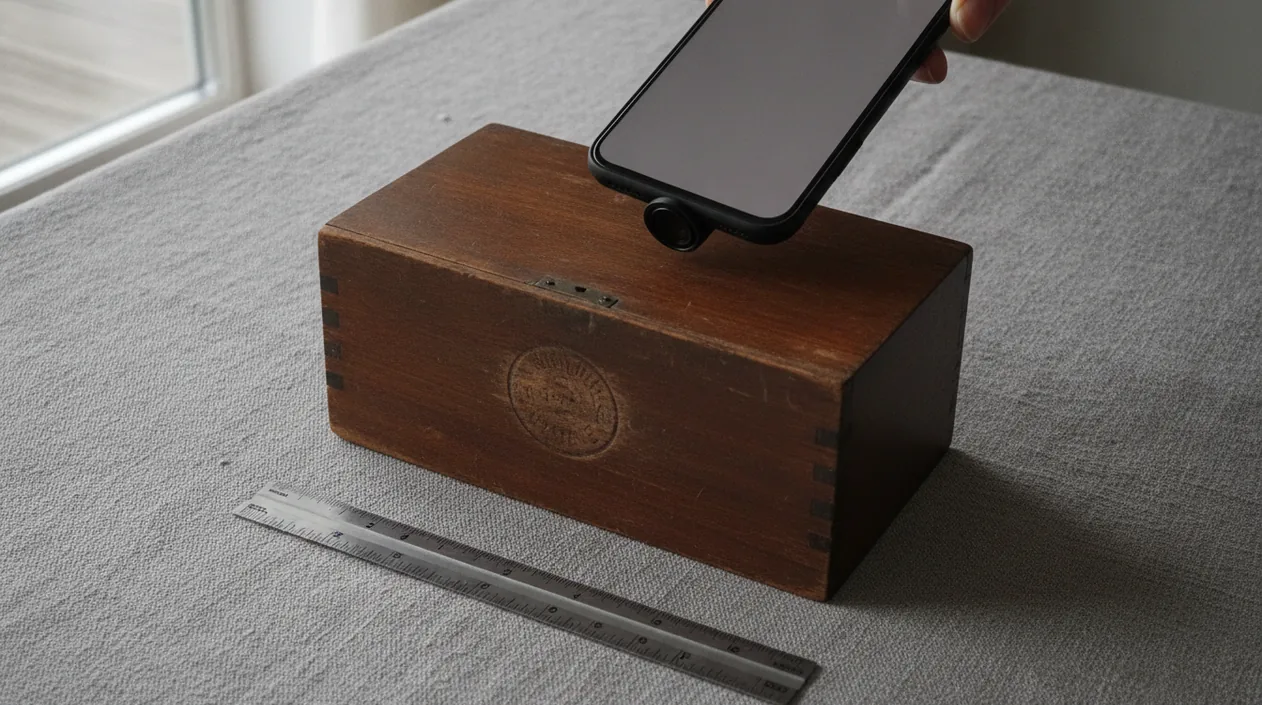
- Put a ruler or an object of known size beside it so scale is clear.
- Shoot the front, back, sides, underside, edge and interior.
- Take separate close-ups of every mark, signature, label, hallmark, serial number or inscription.
- Photograph damage, repairs and construction details such as screws, nails, seams, hinges, casting lines and tool marks.
- Write down dimensions, weight, where you found it and anything you know about who owned it. Keep receipts or papers.
- Scan more than one angle, and run two or more tools if you can. Save each image with the result it produced.
For a quick look, put your best overall shot in the upload box, then use your close-ups to test whatever it suggests.
What each part of the object tells you
Not every detail carries the same weight. This table shows what to look at and what it can reveal.
| What to photograph | What it can show |
|---|---|
| Full shape and proportions | Object type, style and likely period |
| Maker's marks, labels, hallmarks, dates | Maker, country or region, a date range to test |
| Underside, edge, interior, joinery | Hand-cut versus machine-made parts, later repairs |
| Screws, nails, welds, seams, hinges | Construction method, which has to fit the claimed date |
| Patina, oxidation, crazing, wear | Natural aging, restoration, repainting |
| Material close-up | Wood, ceramic, glass, stone, precious or base metal, textile |
Notice how much of this sits on the back and bottom of the piece. People photograph the pretty side. Dealers flip the thing over first.
Telling an antique from a reproduction
Antique, vintage and reproduction are different claims, and a photo supports each one only partly. Look for agreement between several clues. Does the wear sit where hands and use would put it? Do the fasteners match the period? Does the mark look right for the date you were told?
Checking a maker's mark against reference examples
Do not accept a mark because it is present, and if it includes lettering you cannot place, a font identifier for unfamiliar lettering can help you match the typeface. Compare its lettering style, placement, depth and wear with authoritative reference examples, and check whether the maker was even working at the date you are testing. A brand name or style is not proof of the manufacture date, and a mark can be copied onto something newer.
Solid, plated or painted metal
Look at the high points, corners and edges, where plating wears through first. Check the underside for scratches that show a different metal. A magnet and the weight in your hand give more clues. Hallmarks help, but again, a photo alone will not settle it.
Making sense of a price result from an app
Several antique apps show estimated prices or marketplace comparisons. Read them carefully. Asking prices on live listings are not the same as completed-sale prices, appraisals, insurance values or auction results. Someone can ask any number. What matters is what a buyer paid.
A safer routine goes like this. Take the maker, mark, object type, date range and material the app proposed, then search them in museum, library, auction and specialist databases. Compare sold or realized prices, not only active listings. Condition moves value a lot, so match your piece to examples in the same state, with the same repairs or lack of them.
Auction houses and dealers can give market estimates and consignment advice. Ask whether they would profit from buying or selling the item, since that can color the opinion.
When to stop scanning and call a specialist
An app is fine for sorting a box of kitchenware. Bring in a person when the item may be valuable, hazardous, protected, archaeological, rare or possibly counterfeit. A qualified appraiser can speak to condition, authenticity, provenance, insurance, estate and sale questions.
Some categories have their own experts, and trading cards are one of them, so a Pokémon card scanning and identification guide is a better starting point there. Coins go to coin specialists and grading services for authentication, attribution and grade, and our coin identifier guide covers what to photograph first. Stones that might be gems need a gemological laboratory to establish species, treatments and synthetic status, and a gemstone identifier page can help you sort the obvious cases first. Old stamps have their own checks, laid out in the stamp identifier guide. If the object turns out to be a natural specimen rather than a made one, try the rock identifier page.
Natural-history museums, universities, local experts and specialist societies can identify mineral, archaeological or historical items. Availability and fees depend on where you live.
Hazards and legal limits with old objects
Old things can carry old problems. Avoid touching suspected asbestos, lead-containing paint, mercury, radioactive minerals, contaminated soil, needles or unstable artifacts, and get a professional assessment instead. An app labeling something harmless does not make it safe.
Do not excavate, remove, export or sell suspected archaeological or protected natural material without checking the law that applies where you found it. Collecting fossils, minerals, artifacts or wildlife parts can require landowner permission or permits under local, national or tribal rules. Before anything is examined, do not clean, polish, scrape, repair or test it with chemicals. You can erase the very evidence a specialist would read.
Privacy when you upload photos of your home
A photo of a sideboard can also show your living room, your street through the window and your location data. Turn off location permissions you do not need, strip metadata when it makes sense, and crop out faces and household interiors. Do not upload confidential documents or anything that identifies your home. How the apps store or reuse uploads is not spelled out in their listings, so read the privacy terms of any tool before you send a collection photo.
Where antique identification goes sideways
- Shooting one angle and skipping the underside, edge, interior or mark.
- Using flash glare, dim light, filters or extreme close-ups that blur detail.
- Taking the first answer as certain.
- Treating an estimated date as proof of age.
- Treating an asking price as market value.
- Ignoring repairs, replaced parts, restoration and reproduction.
- Cleaning or polishing before you document the piece.
- Skipping specialist authentication for valuable coins, gems, art or antiques.
Fix those and the same app gives you noticeably better leads. For things that are not antiques at all, from a mystery insect to a leaf, a general tool to identify things from a picture works on the same principle: clear photos, a suggestion, then a check against a trusted reference.
Questions about antique identifier app
How do I find the value of antiques online for free?
Search the maker, mark, object type, date range and material, then compare sold or realized prices. Asking prices on live listings do not prove what a buyer will pay.
Can an antique identifier app tell me how old my item is?
Not reliably. An app gives an estimated date, which is not proof of age. Age, construction, marks, wear and documented history all have to agree before you trust it.
Can an antique identifier app tell if an item is authentic?
No. An app can suggest type, period, materials and marks, but authenticity needs examination of construction, wear and provenance. App listings themselves point to professionals for official authentication.
What photos should I take of an antique for identification?
Take the whole item in even light with a ruler, plus the back, underside, edge, interior, damage and close-ups of every mark, label, signature or serial number.
Is an eBay asking price the same as what my antique is worth?
No. Asking prices are not completed-sale prices, appraisals, insurance values or auction results. Look at what similar items in similar condition actually sold for.
Should I clean an antique before taking photos?
No. Do not clean, polish, scrape, repair or test it with chemicals first. Cleaning can remove patina and evidence that a specialist needs to judge age and originality.
When should I see an appraiser instead of using an app?
See a qualified specialist when the item may be valuable, rare, hazardous, protected, archaeological or possibly counterfeit, or when you need an opinion for insurance, an estate or a sale.
Can I trust the price an antique identifier app gives me?
Treat it as a lead, not a value. App prices are often asking prices, which differ from completed sales, appraisals or auction results, so compare sold prices for items in the same condition.