
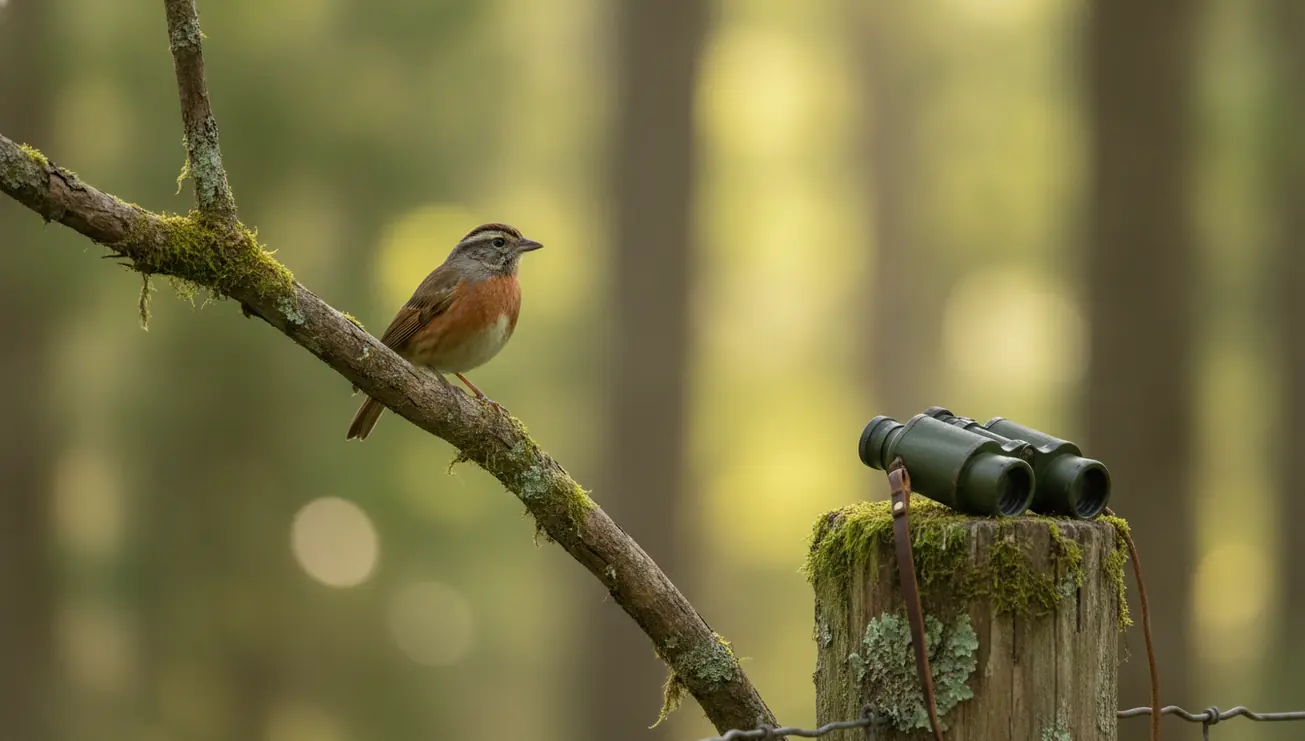
What a bird identifier can and cannot tell you from a photo
A photo-based bird identifier gives you a probable species. It does not give you proof. Computer-vision systems commonly analyze plumage, shape, bill, body size, habitat and the surroundings in the frame, then offer a guess or a short list. Treat that list as a place to start looking.
The software sees only what the camera caught. If the tail is cropped off, the bill sits in shadow or the bird is a speck at the edge of the frame, the answer rests on whatever is left. Blur, glare, filters and artificial color can also create features the bird does not have.
You fill the gap. Naming a bird by picture works best when the image is clear and you add location, date, habitat, behavior and more than one angle. Those extras often settle a bird that plumage alone cannot. A shortlist from a tool plus ten minutes with a field guide beats either one alone.
Short on time? Send your bird photo straight through the upload field. The AI reads the photo, names the bird it thinks it sees and adds a score for its own certainty. Check that name in a field guide before you log it.
Nine features to check on any bird photo
Look at the bird yourself before you accept a result. These are the features that separate species most often.
- Overall shape. Body length, posture, tail length, wing shape, neck length and leg length.
- Bill. Length, thickness, curve and color. Is it hooked, cone-shaped, straight or needle-like?
- Head markings. Eye stripe, eyebrow, crown color, cheek patch, throat patch, crest and any bare skin.
- Plumage pattern. Wing bars, spots, streaks, bands, patches, undertail color, and the contrast between upperparts and underparts.
- Tail. Length, shape, notches and markings on the outer feathers.
- Feet and legs. Color, length and toe arrangement. They show whether the bird is built for perching, swimming, climbing or wading.
- Sex, age and season. Males, females, juveniles and breeding or nonbreeding plumages can look different.
- Habitat and behavior. Woodland, wetland, coast, grassland or town. How it feeds, how it flies, whether it flocks, climbs or hovers.
- Location and date. Range and migration timing can separate species with nearly identical plumage.
Color is what people grab first, and it fails most often when used alone. Shape and bill hold up in bad light. Two birds can share a palette and still have completely different bills, which is why a good field note starts with the silhouette and ends with the paint job.
How to prepare a bird photo before you identify it
A little care here saves a lot of guessing later.
- Skip filters and work from the original file. They shift colors, and color is a clue.
- Crop a copy so the bird is large in the frame. Keep one uncropped copy that shows habitat and scale.
- Write down the date, the exact or approximate location, the habitat, the weather, what the bird was doing and any sound it made.
- List what you can see. Size, silhouette, bill, tail, wing bars, eye markings, legs and dominant colors.
If you can get a second angle from where you stand, take it. Idaho Fish and Game advises keeping enough distance for birds to behave naturally, and a telephoto lens reduces the need to approach. Never step closer for a better frame.
Checking a bird identifier result before you believe it
- Run the image through Merlin for birds, or iNaturalist if the subject might not be a bird.
- Compare the top results with field-guide images and range maps.
- Find at least three independent clues. One should be structural, such as bill shape, and one geographic or behavioral, such as range or feeding method.
- Search the proposed species along with the word lookalikes and read what separates it from its near relatives.
- Ask a local expert or specialist group if the bird is rare, legally sensitive or still uncertain.
- Write the ID down with a confidence label.
Be suspicious if the proposed species is outside its known range, the habitat is wrong or a diagnostic feature is not visible in your photo. If a tool offers a coastal species for a bird in dry woodland, doubt the tool before you doubt your eyes.
Reverse-image search can find similar pictures. A lookalike photo online proves nothing about your bird, because similar and confirmed are two different things.
Look-alike birds and what separates them
Some pairs fool experienced birders. Plumage overlaps, so you lean on other clues.
| Pair | What to check |
|---|---|
| Chiffchaff and Willow Warbler | Leg color, wing projection, song, habitat and geographic range. Plumage can overlap. |
| Carrion Crow and Rook | Face and bill shape, feathering around the bill, body proportions and habitat. |
| Marsh Tit and Willow Tit | Head gloss, bib size, wing panel, call, habitat and range. |
| Juvenile and adult of one species | Missing adult markings, different streaking, different bill color. |
| Male and female of one species | Sex-specific color and pattern differences. |
Song or call shows up on the checklist for several of these pairs, and a still photo gives you neither. Merlin also identifies birds from sound, according to Cornell Lab, so a short recording can do what a picture cannot. When a photo stalls, range and date can be more telling than color.
Why juvenile, female and winter-plumage birds fool photo identifiers
Most field marks in a guide show an adult in good light. Your bird may be neither. Juveniles often lack adult markings and can have different streaking or bill color. Many species show color and pattern differences between the sexes. Migration and winter plumages can be duller or patterned differently, and eclipse plumage adds another disguise.
So when a result looks almost right but something is off, open the species page in a field guide and look at the juvenile, female and nonbreeding images before you throw the answer out. A washed-out version of a bright bird may simply be that bird in the wrong season.
Check the opposite direction too. A tool may name an adult male when your photo shows a streaky young bird. If markings on your bird are missing from the match, ask whether age or season explains the gap. If neither does, the match is probably wrong.
Blurry photo or a short look at the bird?
Sometimes you get a back, a tail and a flicker of wing. That is still data. Write down what you saw before memory edits it. Size against a bird you know. Silhouette. Where the bill pointed. How it flew, and whether it hovered, climbed a trunk, waded or fed in a flock. The sound, if there was one.
Merlin can also work from answers to identification questions, according to Cornell Lab, so you can use it without a clear photo. Be honest about the gap. A blurred or heavily cropped image should come with a note on which features are missing, and the result should sit at possible, not probable. If the bird returns, try again from a better angle.
Merlin, iNaturalist, eBird and local clubs compared
No single bird identifier covers every case, so match the tool to the question.
- Merlin Bird ID. Identifies birds from photos, sounds or answers to a few questions. Cornell Lab says Photo ID covers more than 8,000 species, offers a shortlist and can work offline. It draws on eBird and Macaulay Library images.
- eBird. Supplies the bird observations, photos and sound data Merlin uses, and lets you keep your own sighting records.
- Macaulay Library. Archives bird photos and sound recordings. It is a good place to compare your bird against many images of one species.
- iNaturalist. Gives computer-generated suggestions for wildlife photos, then community review. Handy when you are unsure the subject is a bird at all. For reptiles, try the snake identifier page, and for butterflies and moths there is the caterpillar, butterfly and moth page.
- Local bird clubs and expert groups. The best court of appeal for hard cases, especially when plumage, age, sex or regional variation is involved.
A sound habit is one photo tool for the shortlist and one human or field guide for the call. If your photo shows a bird with prey, the bug page can help you work out the insect it caught.
How to label a bird ID as confirmed, probable, possible or unknown
Pick one of four labels and use it in your records and posts. If you design a poster or field notes page for them, our guide to identifying a typeface can help you match the lettering.
- Confirmed. An expert or independent source agrees, and no key feature is missing.
- Probable. The tool, a field guide and at least three clues point the same way.
- Possible. The species fits, but a diagnostic feature is hidden or the range is a stretch.
- Unknown. Nothing holds together yet.
The labels keep you honest. On iNaturalist, observations may reach research grade after community agreement. Do not claim that status, expert confirmation or any certainty before those conditions are met.
Photographing birds without harming them or breaking rules
Keep enough distance for birds and wildlife to behave naturally. Follow local wildlife laws, protected-area rules, access restrictions and minimum-distance requirements, and stay away from nests, eggs, young, roosts, breeding colonies and threatened species.
The law can be specific. In the United Kingdom, the Nature Photographer's Code of Practice notes that recklessly or intentionally disturbing certain Schedule 1 birds at or near nests can be an offence, and a licence may be required for some photography.
Privacy matters as well. Photos can carry GPS metadata, faces, private property and sensitive locations. Check an app's privacy policy before you upload. Remove location data when you share publicly if it could expose wildlife, homes, schools or private land, and never post the exact spot of a nest or a rare species. Get permission before you enter private land or photograph people.
Do not handle an unknown animal, and do not collect protected wildlife without checking local law. No photo is worth a failed nest.
When you found a feather, an egg or tracks instead of a bird
Plenty of searches start with a clue, not a bird. A single feather can narrow things down, and there is a guide on how to identify a feather you found. Eggs have their own checks, so read about a found egg, but leave any nest and eggs exactly where they are. Mud or snow prints work differently again, and you can identify animal tracks with a separate method. Any of these photos can go straight into the upload box to get a first description. If the subject is not a bird at all, the homepage lets you identify things from a picture across plants, bugs, rocks and more.
Questions about bird identifier
Is there an app that will identify birds?
Yes. Merlin Bird ID from Cornell Lab identifies birds from photos, sounds or questions, and its Photo ID covers more than 8,000 species and works offline.
Can you identify a bird from a picture alone?
Often you get a probable species, but a picture alone rarely proves it. Add location, date, habitat and behavior, and check at least three independent clues.
What is the hardest bird to identify?
Look-alike pairs such as Chiffchaff and Willow Warbler or Marsh Tit and Willow Tit are classic trouble, because plumage overlaps and other clues decide it.
Does Merlin Photo ID work without internet?
Yes. Cornell Lab says Merlin's Photo ID can work offline, and it returns a short list of possible matches drawn from eBird and Macaulay Library images.
How do I know if a bird identification result is wrong?
Doubt it if the species is outside its known range, the habitat does not fit, or a key feature is not visible in your photo.
Do male and female birds look the same?
Often not. Many species show sex-specific color and pattern, and juveniles and winter plumages can look duller or differently marked.
Does iNaturalist identify birds?
Yes. It offers computer-generated suggestions plus community review, and observations may reach research grade once the community agrees on the species.
Is it safe to share the location of a bird photo?
Not if it shows a nest, an endangered species or vulnerable wildlife. Leave exact locations out of public posts and remove GPS metadata from the image first.