
What to expect from a tick identifier
A sharp photo can often get you to the genus or a common species. It rarely gets you further when the image is low resolution or the tick is swollen with blood. Unfed adults are the best subjects. CDC calls the adult the diagnostic stage and recommends examining non-engorged adults.
Here is the limit, stated once. Appearance cannot show whether a tick carries a germ, so a correct name is still not a medical result. Use the ID to understand what you found. Use your symptoms and exposure to decide about care.
Count the legs and find the life stage
Start with the legs. Larvae have 6. Nymphs and adults have 8, according to CDC's tick life cycle pages. That single count separates a larva from the rest, and it separates a nymph from the 6-legged insects people mistake for one.
Most tick life cycles pass through four stages: egg, larva, nymph and adult. The blacklegged tick generally takes about 2 years to finish the cycle. On people, nymphs and adult females are the stages found most often, especially with blacklegged ticks. Nymphs are tiny, so a magnifier or a macro shot helps a lot.
Once you see 8 legs, look at the body. Find the hard plate on the back, called the scutum, and the mouthparts at the front. Then note pale patches, bands, dots, and whether the legs are one dark color.
Capturing a tick on camera, safely
Light and scale matter more than the camera. Do not pick the tick up with bare fingers. Shoot it where it sits first.
- Photograph it before you move it, in bright, diffuse light.
- Take one image from directly above and one from the side.
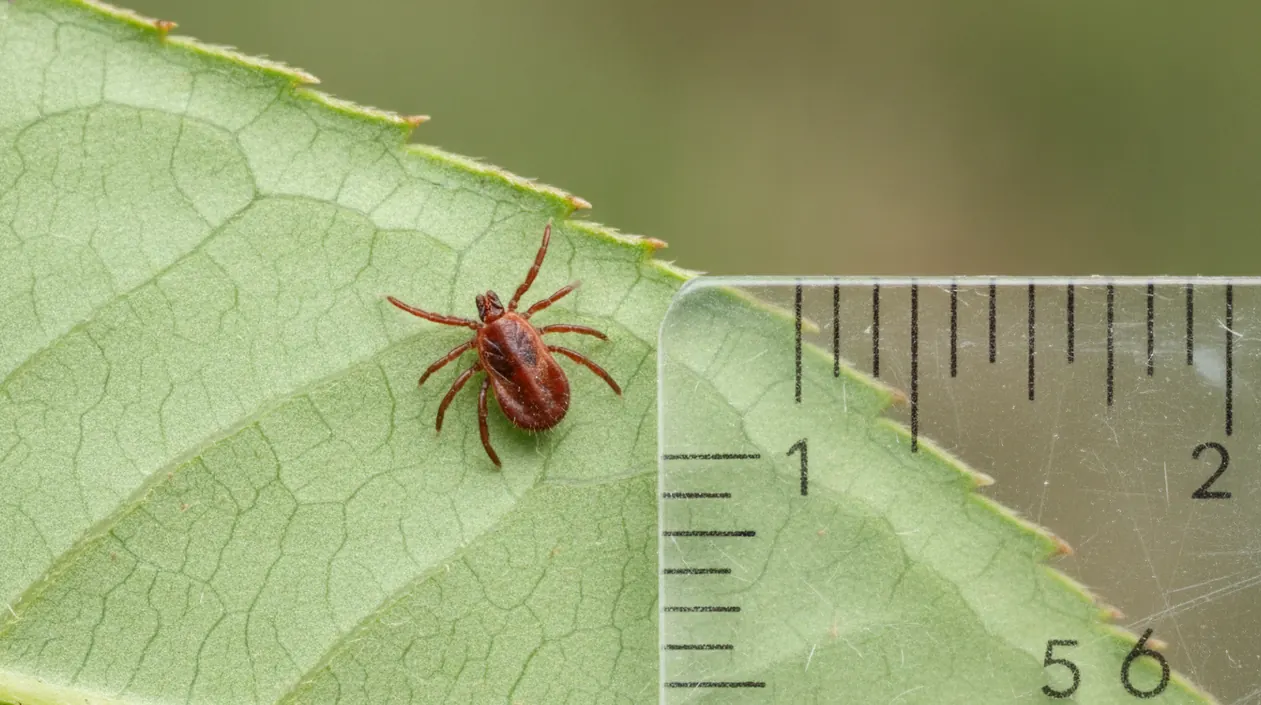
- Place a millimeter ruler or another object of known size beside it.
- If it is safe, shoot the back, the underside, the legs, the mouthparts and the attachment site.
- Write down the date, the exact place, the host, the body site, and whether the tick was attached or free.
- Note whether it looks flat or swollen, and count the legs if you can see them.
Scale is the step people skip. CDC illustrations are not necessarily drawn to scale, so you cannot judge size by holding your photo up to a drawing. A ruler in your own frame settles it.
Crop faces, addresses, pet tags and GPS data before you share any image. Then run your best photo through the checker and compare what comes back, a likely tick with a certainty rating, against the references below. The tool reports what it sees in the photo. It cannot confirm a species on a blurry or engorged specimen.
Common ticks and what separates them
These are the ticks CDC's identification materials cover most. Location matters as much as looks, so keep your geography in mind.
| Tick | What to look for |
|---|---|
| Blacklegged tick, Ixodes scapularis | Small, dark legs. The unfed adult female has a dark body with a lighter rear abdomen. Nymphs and adult females are the stages found most often on people. |
| Lone-star tick, Amblyomma americanum | The adult female has a clear white spot on the back. Males may show white markings along the edge. |
| American dog tick, Dermacentor variabilis | Usually has ornate pale markings on the shield. Adult females commonly bite humans. |
| Rocky Mountain wood tick, Dermacentor andersoni | Another Dermacentor tick, so the place you found it carries weight. Larvae and nymphs commonly feed on small rodents. |
| Brown dog tick, Rhipicephalus sanguineus | Brown or reddish brown, tied to dogs and buildings. A photo alone may not separate it from other brown ticks. |
Groundhog ticks, soft ticks and regional species can resemble the ones above. For those, a reliable name may need a specialist or a microscope.
Why an engorged tick is so hard to name
A tick that has fed swells and changes shape. The scutum looks small against the stretched body, and the color can shift. CDC notes that engorgement makes identification less reliable and that color varies. If your tick is full of blood, expect a genus at best from a photo.
The same caution applies to the lone-star white spot. It is characteristic of the adult female, but a single spot does not confirm every tick, and it says nothing about disease risk. Sex, body structure, host and location all count. Likewise, the dark legs of Ixodes and the pale ornamentation of Dermacentor are clues, not verdicts.
Tick naming errors worth avoiding
- Calling every small dark tick a "deer tick." Several ticks are small and dark.
- Ignoring where you found it.
- Judging by color alone. Lighting changes color, and so does feeding.
- Skipping the leg count.
- Photographing without a ruler.
- Treating a photo of an engorged tick as if it were an unfed one.
- Crushing or throwing away the tick before anyone confirms it.
The last one costs the most. A preserved tick can be examined later. A smear on a tissue cannot.
What gets mistaken for a tick
Nymphs are small enough to pass for specks of dirt or a seed, and a speck on a houseplant may be better handled with the plant problem page. If your speck turns out to be a seed or a bit of plant debris, the plant identifier can help you name it. A few real animals fool people too.
- Spiders have a separate body plan from ticks, and the same goes for our guide to identifying snakes if a reptile is what you actually found. If the shape looks more like a spider, try the spider identifier instead.
- Mites are often much smaller than ticks, and you need a close image with scale to judge them.
- Fleas are flattened from side to side and jump.
- Bed bugs are flat insects with 6 legs.
A tick in the nymph or adult stage has 8 legs and a distinct mouthpart attached to the skin. If you counted 6 legs, you are probably looking at an insect, and the bug identifier page is the better start. If you are new to photo identification in general, our guide to identifying things from a picture covers what a clear photo needs.
Where to check your result
CDC publishes most of the reference material you need. Its DPDx tick pages give illustrated identification resources for Dermacentor, Ixodes, Ornithodoros and Rhipicephalus. Its tick ID materials compare blacklegged, lone-star, dog, wood, brown dog and groundhog ticks side by side. Its Public Health Image Library lists 397 tick images, including life stages.
Any tick identifier app or tool, ours included, is a starting point. Accuracy on tiny, damaged, engorged or regionally uncommon ticks has not been independently validated, so confirm anything that matters.
When to ask a person instead of a photo
If the name matters for your health, put the tick in a sealed container, or follow your local public-health instructions, and ask one of these.
- Your state or provincial health department, which may offer regional tick identification.
- A university extension entomologist or a medical entomologist, who can handle difficult specimens.
- A veterinarian, if the tick came off a dog or cat.
Rules on collecting, mailing and testing ticks vary by jurisdiction, so check yours before you send anything.
Removing a tick and when to see a doctor
For an attached tick, use fine-tipped tweezers. Grasp it close to the skin and pull upward with steady pressure. Do not burn it, crush it against the skin, or smother it with petroleum jelly or chemicals. For a pet, remove it carefully and ask your veterinarian about prevention and illness.
No photo, from us or anyone, replaces medical advice. See a doctor if you have fever, a rash, a severe headache, facial weakness, joint swelling or any other illness after a bite, or if mouthparts stay in the skin. Decide based on your exposure and symptoms, not on the species guess from a picture.
Questions about tick identifier
How do I tell if I had a tick?
Check skin for an attached or free tick with 8 legs and a mouthpart in the skin. If you have fever, rash or headache after a bite, see a doctor.
How to check for ticks with iPhone?
Use the phone camera in bright, diffuse light. Shoot from above and from the side with a millimeter ruler beside the tick, then compare the images with CDC tick illustrations.
What else can be mistaken for a tick?
Spiders, mites, fleas and bed bugs. Nymph and adult ticks have 8 legs, bed bugs have 6, fleas are flattened sideways and jump, and mites are often much smaller.
How likely is it to get Lyme disease from one tick bite?
A photo cannot answer that, because appearance does not show whether a tick carries a pathogen. Talk to a doctor about your exposure, the tick, and any symptoms.
How to tell if a tick bite gave you Lyme?
You cannot tell from a photo of the tick or the bite. See a doctor for fever, rash, severe headache, facial weakness or joint swelling after a bite.
What color are ticks on dogs?
Brown dog ticks look brown or reddish brown, but color varies with species, lighting and feeding. A veterinarian can identify ticks removed from a dog.
Can you identify a tick that is full of blood?
Often only to genus. Feeding swells and distorts the body and can change its color, so CDC recommends examining non-engorged adults for the most reliable identification.
Does the lone-star tick white spot prove the species?
No. The white dorsal spot is characteristic of adult females, but you should also check sex, body structure and location before naming the tick.