
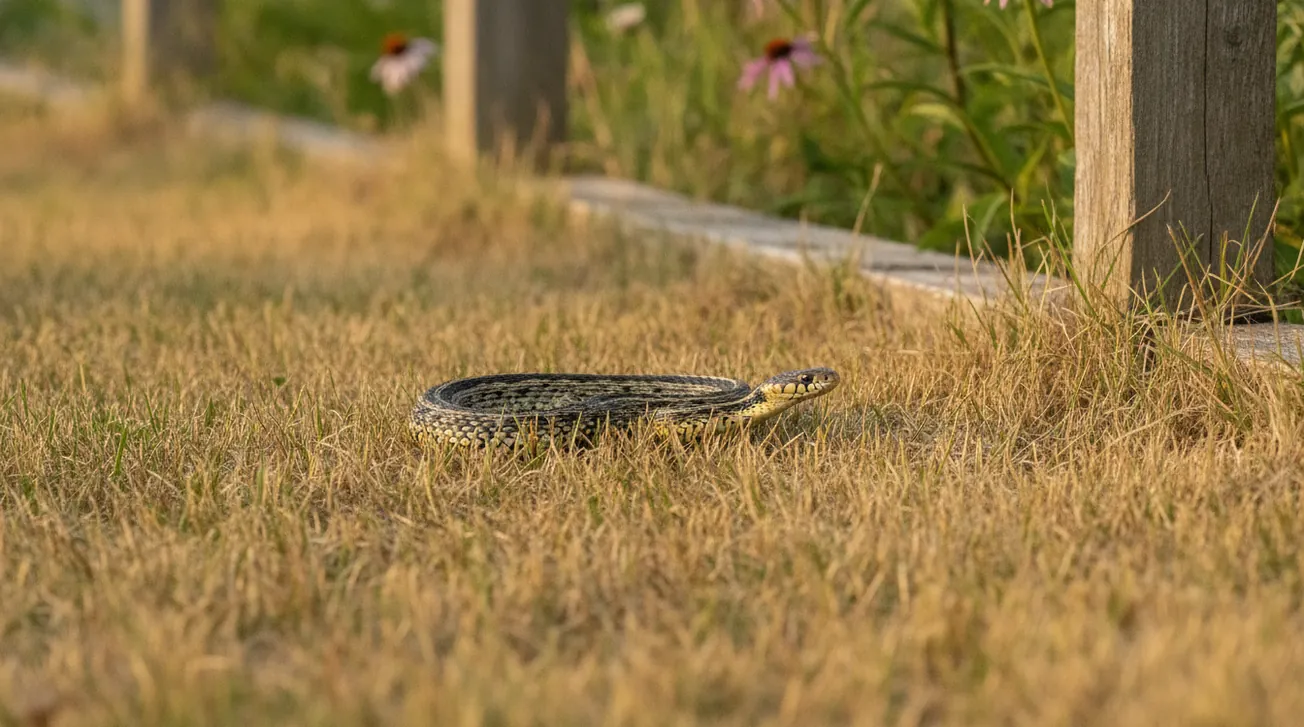
How far a snake identifier result can be trusted
Treat a photo result as a lead, not a ruling. A good snake identifier weighs pattern, color, body build, scale texture, head proportions, tail features, habitat and geographic range, then names the likeliest candidates. That narrows the field fast. It proves nothing about safety.
Online photo identification guides carry the same warning. Matches can be wrong, especially with blurry images, juveniles, unusual coloration and closely related species. A single shot of a coiled snake in leaf litter gives any identifier very little to work with.
Already have a snake photo? Send it straight through the tool here. The AI describes the snake it sees and reports a certainty level, and that answer may be wrong, so never rely on it near a live animal. The rest of this page shows you how to check it.
What to record before you leave the spot
Write these down while the snake is still in view, or right after. A photo carries only part of the story.
- Where and when: country, state or province, nearest locality, elevation if you know it, and the date.
- The entire body, if you can see it.
- The back pattern: stripes, blotches, bands, diamonds, crossbands, rings or plain color.
- Scale texture, smooth or keeled, if it is visible.
- Body proportions: slender, stout, short or long.
- Head and neck markings.
- Tail shape, and any rattle or bright tip.
- Habitat: water, forest, grassland, desert, urban area or building.
Location is the item people skip. Geographic range is often what separates two similar species, so an identification that ignores where you were is incomplete.
Getting a snake photo from a safe distance
- Stop several body lengths away. Keep children and pets back too.
- Use optical or digital zoom. Do not step closer for a close-up.
- Shoot the whole body, a side view, the back pattern, the head and the tail, but only the shots you can get safely.
- Record the date, the habitat and the approximate length. Call the length an estimate, because perspective distorts apparent size.
- Keep the original file. Its timestamp and location data help whoever checks it later.
Never touch, corner, move or kill the snake for a better image. Do not block its escape route, and skip the selfie or staged photo. A blurry but safe picture beats a sharp one taken at arm's length.
Snake features that settle an ID, and where each one fails
No single trait does the work. This table shows what to look for and the limit on each clue.
| Feature | What to record | Limit |
|---|---|---|
| Body pattern | Stripes, blotches, crossbands, rings, diamonds or a plain back | Pattern and color vary by age and region |
| Scale texture | Smooth or visibly keeled back scales | A blurry image usually cannot show this reliably |
| Body shape | Slender or stout, and thickness against something familiar | Perspective distorts apparent size |
| Head | Shape, markings, neck width, visible scales | Harmless snakes can flatten the head and look triangular |
| Eyes | Pupil shape, only if clearly visible from where you stand | Never move closer to check pupils |
| Tail | Rattle, taper, bright tip or banding | No visible rattle does not mean the snake is harmless |
| Location | Country, state or province, nearest locality, elevation | Needs a candidate list for that place to be useful |
| Behavior and habitat | Swimming, climbing, burrowing, road, garden, water edge | Behavior alone is not diagnostic |
Why head shape and pupil shape make poor shortcuts
Two folk rules cause most bad calls. The first says a triangular head means venomous. The second says a round pupil means harmless. Wildlife-identification guides reject both as proof.
Harmless snakes can flatten their heads when threatened, and a flattened head looks triangular. A round pupil does not clear a snake either. Checking a pupil also means getting close, which is the one thing you should not do.
Color alone fails too. It shifts with age and region, and two different species can share the same palette. Pattern, body build, scale texture, tail and range all have to agree before you trust a name.
Snake lookalikes that fool people
Watersnakes and cottonmouths
Harmless watersnakes are frequently mistaken for cottonmouths. Use your regional range, the full-body pattern, scale texture and several markings together. Head shape on its own will mislead you in both directions.
Legless lizards and snakes
A clearly visible external ear opening or movable eyelids can point to a legless lizard. A photograph often does not show either one, so a long, limbless animal in a picture may stay in the maybe pile.
Young snakes and unusual color variants
Juveniles and odd color forms are hard to identify from photographs. If the snake in your picture is small, brightly marked in a way that does not match adult guides, or just looks off, expect a lower-confidence answer.
Regional lookalikes
Some similar species are separated mainly by where they live. That is why a state or province list beats a world gallery for most people.
Searching by state or region when you have a snake to name
Many people looking for a snake identifier add a place name or a species name to the search, such as a state or a particular pit viper. The method stays the same. Start with the pattern and body build in your photo, then check which snakes occur where you were standing.
Regional wildlife agencies and field guides are the best source for local ranges, venomous-species warnings and identification keys. Once you have a candidate, confirm it occurs in your location and compare at least three independent traits. If only two match, you do not have an ID yet.
When scale counts matter, and why most photos cannot show them
Some identification keys count dorsal scale rows, with totals such as 15, 17 or 19. Those counts need a clear, close image and the expertise to read it. A phone photo taken from several body lengths away will not support them.
Even telling smooth scales from keeled ones can be out of reach in a blurry shot. So do not force it. Photograph what you can see from a safe distance and let a regional expert deal with the finer points if the answer matters.
Where to check a photo result
Use any snake identifier result as a starting point for a second look. Three kinds of resource are worth your time.
- iNaturalist, a community platform for photo-based wildlife observations, where other observers can weigh in on your record.
- The Reptile Database, which offers taxonomic information and an advanced search for reptile species lists.
- Regional wildlife agencies and field guides, for local ranges, venomous-species warnings and keys.
If all you found was a winding trail in sand or mud, our guide to reading animal tracks in mud or sand covers that case. A spider you cannot name needs the same approach, look and photograph but do not touch, which our spider identifier guide walks through. Ticks are a different problem again, and the tick identifier page covers them.
The same photo habits help with plants, rocks and more, and our guide to identifying birds from photos applies them to feathered wildlife. Our home page explains how to identify things from a picture across all of them.
An uncertain or possibly venomous result? Next steps
Treat an uncertain result as unidentified. Treat a possibly venomous result the same way. Do not handle the snake, and do not let a confident-sounding label change that.
Ask a regional expert to confirm when the image is unclear, when the snake is inside a building, or when a venomous species is possible. Qualified herpetologists, museum staff, wildlife rehabilitators and animal-control professionals all fit. The same goes when pets, protected wildlife or legal removal are involved.
Keep the original image and its metadata for them. Before you post it publicly, think about whether an exact location could expose a rare or sensitive wildlife site.
Snakebite, handling and the limits of a photo ID
Never handle an unknown snake based only on a photo result, and never eat, treat or move anything on the strength of one. After a suspected bite, seek emergency medical care immediately and contact emergency services or poison control. Do not cut or suck the wound. Identification should not delay medical care, so go first and describe the snake on the way if you can.
Law and privacy before you share or move a snake
The rules differ by country, state or province, species, land ownership and protected status. Do not collect, relocate, kill, sell or keep a snake unless local law and qualified authorities allow it. Check with your local wildlife agency first.
Photo uploads can also reveal more than you mean to. GPS metadata, timestamps, faces, private property and the location of rare wildlife can all travel with the file. Check what any service you use does with your upload before you send a picture.
Snake ID errors, and what they can cost you
- Treating a triangular head as proof of a venomous snake.
- Treating a round pupil as proof of a harmless one.
- Relying on color alone.
- Ignoring geographic range.
- Photographing only the head and leaving out the body pattern and tail.
- Approaching or handling the animal to get a clearer image.
- Reading an AI match as a safety verdict.
- Calling a legless lizard a snake when the eyes and ears are not visible.
- Naming a species, size or venom status from a blurry or partial photo.
Most of these come down to the same habit, deciding too early from too little. Slow down, collect several traits, and let the location narrow the list.
Questions about snake identifier
Can you identify a snake from a photo?
You can get a probable identification, not a certain one. Pattern, scale texture, body shape, tail, head markings and location together give the best odds, and blurry images lower them.
Is a triangular head a sign of a venomous snake?
No. Harmless snakes can flatten their heads defensively and look triangular, so head shape alone is unreliable. Use pattern, body build, tail, range and several other traits together.
Does a round pupil mean a snake is harmless?
No. Wildlife guides do not treat a round pupil as proof of a harmless snake, and checking pupils means getting too close. Never approach to inspect eyes.
What photos help identify a snake?
Get the whole body, a side view, the back pattern, the head and the tail, zooming in from several body lengths away. Add your location, date and habitat.
What should I do if a snake bites someone?
Seek emergency medical care immediately and contact emergency services or poison control. Do not cut or suck the wound. Identifying the snake should never delay treatment.
How do I tell a watersnake from a cottonmouth?
Head shape alone fails, since harmless watersnakes are often mistaken for cottonmouths. Check your regional range, the full-body pattern, scale texture and several markings together.
Can an AI snake identifier be wrong?
Yes. Photo guides warn that AI matches can be wrong with blurry images, juveniles, unusual coloration and closely related species. A result is never a safety verdict.
Who should I call for a snake inside my house?
Call a qualified professional such as animal control, a wildlife rehabilitator or a herpetologist. Keep people and pets away, and do not corner the snake or block its escape route.
Is it legal to move or kill a snake I find?
Rules vary by country, state or province, the species, land ownership and protected status. Do not collect, relocate or kill one unless local law and qualified authorities permit it.